How Pests Get Into Your Home in Spring (And How to Stop Them)
Now that spring pest season is officially underway in Central Virginia, many homeowners are starting to notice more activity—ants in the kitchen, spiders in corners, or insects aro...
Midlothian · Community Photo
Now that spring pest season is officially underway in Central Virginia, many homeowners are starting to notice more activity—ants in the kitchen, spiders in corners, or insects around windows and doors. But one of the most common questions we hear is: how are these pests getting inside in the first place?
The answer is usually simpler than you think. Pests don’t need a wide-open door—they just need a small opportunity. If you want to stop pests this season, Pest Now can help identify entry points and create a protective barrier around your home before infestations begin.
Why Spring Is the Easiest Time for Pests to Get Inside
Spring creates the perfect conditions for pests to move closer to your home. Warmer temperatures, increased moisture, and new food sources all push insects and rodents to explore—and often, that means entering your home.
During this time of year:
- Pests are actively searching for food and water
- Colonies are expanding
- Outdoor conditions drive pests toward shelter
- Small openings become high-traffic entry points
Once pests find a way in, they tend to keep coming back.
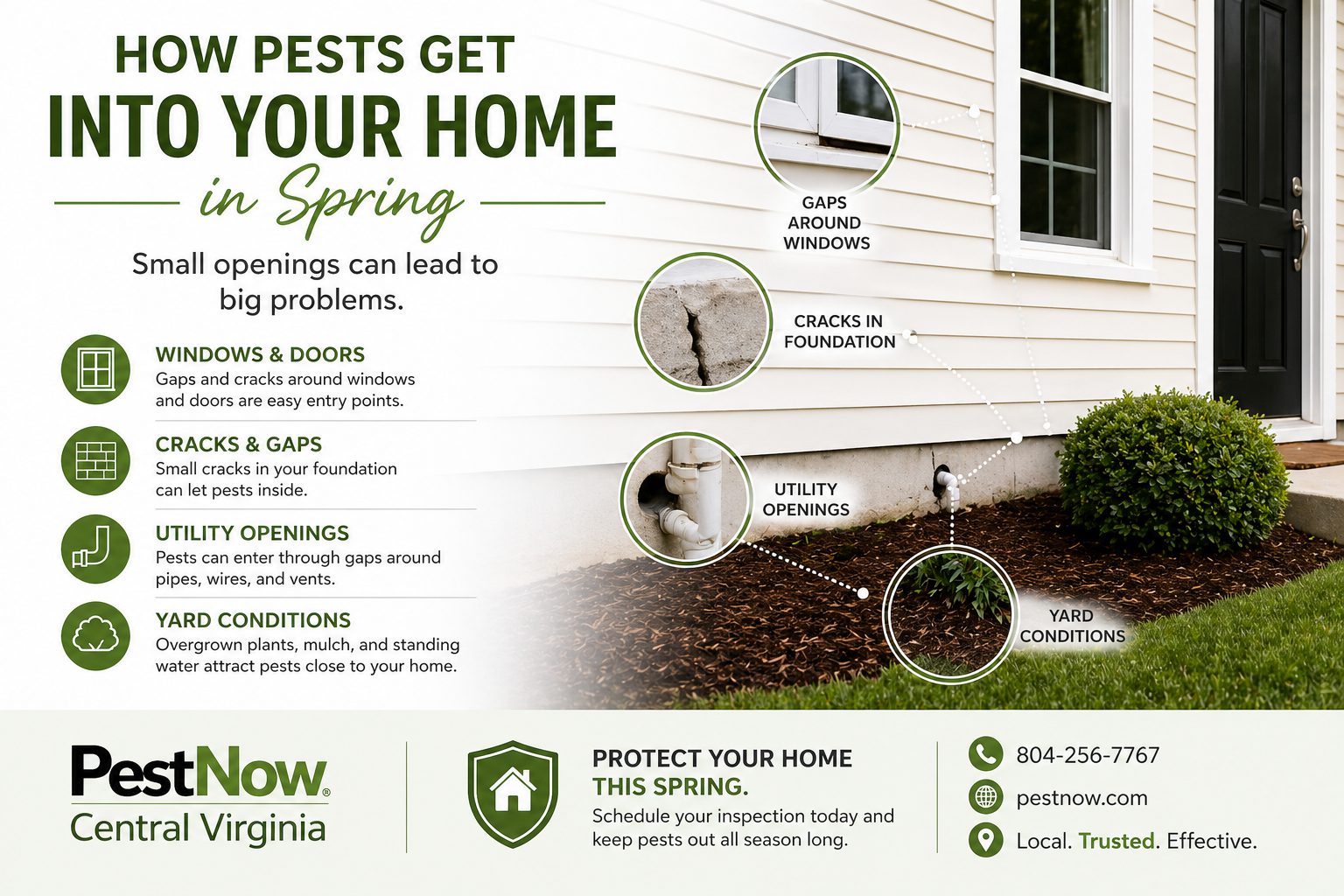
The Most Common Pest Entry Points
You might be surprised how easily pests can get inside. Many homes have small openings that go unnoticed but are big enough for pests.
1. Gaps Around Windows and Doors
Worn weather stripping, small cracks, and gaps under doors are some of the most common entry points. Ants, spiders, and even rodents can slip through these spaces.
2. Cracks in the Foundation
Over time, foundations naturally develop small cracks. These are perfect entry points for ants, termites, and other crawling insects.
3. Openings Around Utility Lines
Where pipes, cables, and wires enter your home, there are often small gaps. These openings are rarely sealed properly and provide easy access for pests.
4. Crawl Spaces and Attic Vents
Uncovered or damaged vents allow pests to enter and settle in undisturbed areas like crawl spaces and attics.
5. Garage Doors
Even a small gap at the bottom or sides of a garage door can allow rodents and insects inside—especially at night.
How Your Yard Plays a Role
Pests don’t just appear—they’re often already living near your home. Your yard can either attract pests or help keep them away.
Common yard-related issues include:
- Shrubs or branches touching your home
- Mulch holding moisture near the foundation
- Standing water from rain
- Wood piles or debris near the house
These conditions create the perfect environment for pests to gather before moving indoors.
Why Small Openings Become Big Problems
Even the smallest gap can lead to a major infestation. Mice can fit through openings the size of a dime, and ants need even less space.
Once pests establish a path into your home:
- They leave scent trails (ants)
- They return repeatedly
- Colonies begin to grow
- New pests follow the same route
This is why simply removing visible pests doesn’t solve the problem.
How to Reduce Pest Entry This Spring
There are a few simple steps homeowners can take to reduce pest entry:
- Seal cracks and gaps around doors and windows
- Repair damaged weather stripping
- Close openings around pipes and cables
- Trim landscaping away from your home
- Eliminate standing water
- Keep garage doors properly sealed
These steps can make a big difference—but they don’t always catch everything.
Why Professional Prevention Works Best
The most effective way to stop pests is to combine prevention with professional treatment. Pest Now doesn’t just treat visible pests—we identify how they’re getting in and stop the problem at the source.
Our approach includes:
- Full home inspections
- Entry point identification
- Targeted treatments
- Seasonal protection plans
This ensures pests don’t just go away—they stay away.
Stop Pests Before They Settle In
Spring is when pests are most active—and most likely to enter your home. The sooner you address entry points, the easier it is to prevent a full infestation.
If you’re noticing pest activity or want to protect your home this season, contact Pest Now today to schedule your inspection. A proactive approach now can save you from bigger problems later.
Every Thursday — local news, events, deals, and new listings. Free forever.